SAVAGE ANCESTRY
Dedicated to Thomas Savage "The Carpenter"
and
Ensign Thomas Savage

The Search for Their Antecedents and Their Descendants


Check out the
SAVAGE DNA PROJECT

I have had my DNA typed and
posted on the Savage DNA web
site. If anyone is interested in
comparing their DNA to my own
please go to;
www.worldfamilies.net/surnames/Savage
    Thomas Savage, "The Carpenter," prominent figure in Northampton and Accomack Counties on the Eastern Shore of
    Virginia, was an early arrival to the shores of Colonial Virginia. He is known to have been a builder of watercraft, a
    manufacturer of casks and barrels, and a large plantation owner. The name, Savage, is said to be the oldest continuing
    family name in America.
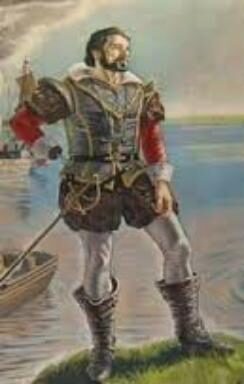
    Ensign Thomas Savage is well known in Virginia History. In 1608, at the age of thirteen he was given to Powhatan by
    Captain Christopher Newport as a hostage to insure friendship with the powerful Powhatan.  The "trusty servant" Namotack
    was given to Newport in exchange for Savage.

    By 1632, when we find our first record of Thomas Savage (100
    acre lease/grant), the Jamestown Colony had expanded across the
    bay to the Eastern Shore of Virginia. We don't know the age of
    Thomas, or the specific year he arrived on the shore of the new
    world, nor do we know from where in England he came, or if he
    was born in Virginia.  His name is not found in the muster of
    1624/25, so there are these possibilities; he arrived between 1625
    and 1632, or he was born in the colony and was, for whatever
    reason, not included in the muster.
    His first land acquisition, 100 acres on Old Plantation Creek, was
    very close to the land of another Thomas Savage; one well known
    in Virginia history. "Ensign" Thomas Savage arrived at
    Jamestown in January, 1607/08 "in the first supply" and some
    researchers have speculated that Thomas "The Carpenter" was
    his son. To date, this has not been proven and is still a subject of
    some controversy, but the evidence that he was, in fact, the son of
    the Ensign, is growing.
    The Carpenter next owned 400 acres on the island protected
    seaside, but ultimately settled on 500 acres about ten miles north
    on Nassawadox Creek where he had a good, deep water facility
    for building watercraft.
    Note that each of the three locations were on protected water,
    which probably indicates that he had been in the boat building
    business for some time.
A skirmish with the Indians near Jamestown

    Perhaps the most helpful genealogy historian of the Eastern
    Shore of Virginia was Ralph T. Whitelaw. In the passage printed
    below, Whitelaw indicates what many have believed, that
    Thomas Savage The Carpenter was another son of Ensign
    Thomas Savage.
    VIRGINIA'S EASTERN SHORE, by Ralph T. Whitelaw,
    Volume 1, page 511.
    N106 (Parcel 106 in Northampton County)
    1646; Patent to Thomas Savage for 500 acres. Some historians
    have believed that this Thomas Savage was another son of
    Ensign Thomas Savage(N49), but a careful search has revealed
    nothing to substantiate that claim. It seems more likely that he is
    the same Thomas Savage, carpenter, who received a lease for 100
    acres on Old Plantation Creek in 1633, and that he received this
    present patent after he had become established and acquired the
    means to provide the necessary headrights.
    Whitelaw  found the same two court records which I, myself
    found (see below) which named son, Thomas as an heir to the
    Ensign Thomas Savage estate, but he discounts this with; "the
    two records calling him Thomas must have been a careless
    misuse of the name." Whitelaw assumed that the court records
    should have read, John Savage, not Thomas Savage. There is
    little question that the two court records printed below names
    Thomas Savage as an heir and I believe it's a rather bold
    conjecture on the part of Whitelaw to write it off as "a careless
    misuse of the name." Also, The Dictionary of National
    Biography, by Oxford University Press, says of Ensign Thomas
    Savage; "he had two sons, Thomas and John, besides other
    children who died young." Researchers of the Ensign Thomas
    Savage line imply that Captain John Savage was the sole heir to
    the estate of Ensign Thomas. There is a mistake here somewhere
    - is it with the court records at two different times, or is it with
    the Ensign Thomas researchers? To date I have found no hard
    evidence that Thomas The Carpenter did end up with the 9000
    acres. He had at least two properties that he acquired himself;
    500 acres and 250 acres. The 500 went to son, Thomas and the
    250 acres went to son, John, but I have found no record of any
    other large tract. This does not mean that there were no such
    records at one time - most of the early records have not survived.
    It's appears to me that Ensign Thomas Savage fathered at least
    two sons and It seems unlikely to me that there were no other
    children surviving at the time of his death; after all, he was a
    renowned adventurer.

    COUNTY COURT RECORDS of ACCOMACK-
    NORTHAMPTON, VIRGINIA, 1640-1645, by Susie M. Ames.
    Published for The Virginia Historical Society.
    February 22, 1639:
    "[fol. 17] It is thought Fitt and Accordingly Ordered By this
    Courte [that the] Land of Thomas Savage sonne and heire unto
    Ensigne Thomas Savage Deceased shall Be surveyed within the
    space of a Moneth after the date hereof. And that the survey
    thereof shall bee payde for By the Overseers; And Further if in
    case noe payment shall bee by them made For the survey
    thereof, That then there shall be soe much raysed out of the said
    Land as shall Fully satisfye and pay For the same."
    September 7, 1640:
    "A very greate Quantity of land is graunted unto Thomas
    Savage sonne and heire unto Ensigne Thomas Savage [bounded]
    as followeth viz. with the Creeke of Accomack on the [South
    the] greate Bay on the West Wisoaponso [?] on the North and
    the           on the East dated the one and twentieth day of
    December I terrio Caroli Rex."

    The first firm record we have of Thomas Savage “The
    Carpenter” is the land transaction of 1632:
    “Thomas Savadge, Carpenter, 100 acres on Old Plantation
    Creek, at Accomacke, abutting westerly on the land granted
    Roger Saunders, and thence east towards a creek called the
    Second Creek. By Harvey, March 14th, 1632. 21 year lease.”
    It had been conjectured that “The Carpenter” was the same
    Thomas Savage who arrived in 1623 on the ship, Ambrose, as
    identified in the Virginia muster of 1625.
    In the July-September issue of THE VIRGINIA
    GENEALOGIST, Volume #7, No. 3, page 99, in an article
    entitled; THOMAS SAVAGE, CARPENTER, OF THE
    VIRGINIA EASTERN SHORE, Lundie W. Barlow of
    Richmond, Virginia says the following:
    “The story of Ensign Thomas Savage has been told many times,
    but scant attention has been given to his contemporary, Thomas
    Savage, carpenter, a neighbor and possibly, but not
    demonstrably, a kinsman.”
    Barlow goes on to include a short history of Ensign Thomas
    Savage, and then follows with;
    “With this summery of evidence respecting Ensign Thomas
    Savage and his immediate descendants as a background,
    consideration may now be given to his namesake, Thomas
    Savage, Carpenter, and the latter’s progeny for several
    generations. Thomas Savage (c1606-c1654) first appears in the
    Virginia records in 1625 as a servant of Mr. William Gany of
    Elizabeth City County. He was eighteen years of age and had
    come to the colony about two years previously. On 14 March
    1632/3 he entered into a twenty-one year lease for 100 acres of
    land on Old Plantation Creek in present Northampton County,
    being designated therein as ‘Thomas Savage, Carpenter’.”
    Barlow then continues with information on Thomas the
    Carpenter and two subsequent generations and that information
    has been verified by my own research as outlined in my book;
    SAVAGE IS MY NAME.
    However;
    Recent disclosures in the minutes of the Court of Colonial
    Virginia, concerning Thomas Savage, servant of William Gany,
    proves that this Thomas Savage died by drowning in 1626 (see
    court record below). Therefore, the Gany servant could not have
    been Thomas Savage the Carpenter as I incorrectly reported in
    my book. Another interesting point, as shown in these court
    documents, is that the Savage lad who drowned was actually
    indentured to an individual other than Gany, but was "rented
    out" to Gany for a period of one year.
    The text of these disclosures, from the minutes of the Court of
    Colonial Virginia, was provided to me by Mr. James W. Petty,
    Genealogist, PO Box 893, Salt Lake City, UT  84110, 801-572-
    4049. Mr. Petty recently was given the 2005 Mosher Award by
    the Board for the Certification of Genealogists, for his research
    on Colonial Virginia Headright Records.  While doing research
    on the "Headright" system Mr. Petty ran across the record of
    the death, by drowning, of the Gany servant and thoughtfully
    notified me of his finding so that the record could be set
    straight. I subsequently printed a correction for my book.
    So we see that Thomas Savage, the Gany servant, who arrived in
    Virginia in 1623 at age sixteen, on the ship, Ambrose, could not
    have been Thomas Savage "The Carpenter." Now we face the
    questions:
    When did "The Carpenter" arrive? Or was he born in Virginia?
    What was his age?
    Was he another son of Ensign Thomas Savage?
    If any reader has a clue, no matter how far-fetched it may seem,
    please contact me.

    After spending many years tracing my line to Thomas
    Savage, in 1995 I published a book covering the thirteen
    generations from he to my grand-children. After the book
    was completed I continued the search for the antecedents
    and descendants of this remarkable man. The book is
    entitled;

    SAVAGE IS MY NAME
    A History of Thirteen Generations of a
    Savage Family in America

    This book is available for sale. It covers the eleven
    generations from Thomas Savage, The Carpenter, to
    myself. My children and grandchildren make the total
    number of generations equal thirteen. The book is high
    quality hardback, 308 pages, illustrated
    and indexed. Price is $29.50 plus $6.50
    for packaging and shipping first class, total - $36.00.
    Media Rate shipping is cheaper, but slower - $33.00.

    Mail check to; R. Blair Savage
    157 Shadowleaf Dr., Hendersonville, NC  28739
    Robinson T.
    Savage and many
    of his descendants
    are told about in
    Evelyn Guard
    Olsen's book,
    Indian Blood, a
    brilliant narrative
    about life in the
    Blooming Rose
    area of Garrett
    County during the
    1800's.
    Stephen
    Schlosnagle's
    bicentennial
    history of Garrett
    County contains
    numerous
    references to our
    Savage ancestors.
    Garrett County
    Graves would be
    several pages
    thinner had
    Robinson not
    planted his roots
    where he did.

A Shallop

Shallops of the time
were described as;


"of twenty-six feet
by the keel with
masts, oars and
yards".


"of four tons".


"a sloop rigged craft
of about twelve
tons". (Capt. John
Smith's shallop with
which he explored
the bay area)
    Robinson T.
    Savage was the
    first school teacher
    in Western
    Maryland. He was
    a friend and
    neighbor of
    Meshack
    Browning.
    Meshack was a
    famous pioneer
    hunter and
    outdoorsman. His
    flintlock rifle rests
    in the Smithsonian.
    In Meshack's
    book, Forty-four
    Years of The Life
    Of A Hunter, a
    tome about his
    many exploits, he
    tells about he and
    Robinson being
    together in the War
    of 1812. They
    volunteered, were
    appointed
    sergeants and
    marched off to
    Baltimore.
A quote from the pen of J.C. Wise:

"These old carpenters and ship-builders seem to have been
constantly occupied and prosperous".

Thomas The Carpenter had two sons, Thomas, Jr. and John.
A century after he was active on the Eastern Shore,
Thomas Savage was referred to, in court records as;
Thomas Savage The Elder.

    The line from Thomas Savage the Carpenter to me is
    as follows:

    01. Thomas Savage1             ?    - 1654-55

    02. Thomas Savage2          1646 - 1721

    03. Robinson Savage1        1699 - 1774

    04. Robinson Savage2          ?     - 1786

    05. Robinson T. Savage     abt 1769 - 1830's

    06. Evan Savage                  1797 - after 1849

    07. Robert Savage               1819 - 1895

    08. Nelson E. Savage           abt 1838 - 1916

    09. Milton Jackson Savage  1880 - 1960

    10. Russell Milton Savage    1901 - 1986

    11. Russell Blair Savage       1934 –  (That's me!)

    Additions and corrections to the information
    contained herein are welcome.
    I may be contacted at:
    R. Blair Savage
    157 Shadowleaf Dr.
    Hendersonville, NC  28739
    Ph 828-808-3749

    I may be contacted by email at the address
    following. This address is broken into segments to
    prevent copying by spam spiders.

    rbsavage1 followed by; @  followed by; yahoo.com
Counter

    This web site went on-line in July of 2005.
    I will continue to add to it any information
    that I may find on Thomas Savage the
    Carpenter and Ensign Thomas Savage.
    I also regularly add to the 4000 + names on
    the Robinson T. Savage web site.

    The content of this web site is protected by
    United States copyright law. Content from
    this and the Robinson T. Savage site
    may be reproduced by private individuals for
    the purpose of adding to their personal
    genealogy data base.
    Commercial use is prohibited without the
    written consent of R. Blair Savage.

    Thomas Savage had many craftsmen and laborers
    working his shops and plantation. Some of them
    were slaves, some were indentured servants and
    undoubtedly some were freemen.

I've also published a book of
40 short stories, all true.
160 pages, illustrated, soft cover.
Price is $10.00 when ordered with my Savage book.
    The aim of this site is to:
    1. Make available information on the continuing effort to determine the relationship of Thomas Savage the Carpenter, who first appears in
    Colonial Virginia records in 1632, and Ensign Thomas Savage who arrived in 1607/08 with the "First Supply" to Jamestown, and to
    determine their family history in England.
    2. Provide assistance, where possible,  to those who believe they may be descended from these two adventurers.
SAVAGE  SAVAGE  SAVAGE  SAVAGE  SAVAGE  SAVAGE  SAVAGE  SAVAGE  SAVAGE  SAVAGE  SAVAGE  SAVAGE  SAVAGE  SAVAGE  SAVAGE  SAVAGE  SAVAGE  SAVAGE  SAVAGE  SAVAGE  SAVAGE  SAVAGE  SAVAGE  SAVAGE  SAVAGE  SAVAGE  SAVAGE  SAVAGE  SAVAGE  SAVAGE  SAVAGE  SAVAGE  SAVAGE  SAVAGe
HISTORY HISTORY HISTORY HISTORY HISTORY HISTORY  HISTORY  HISTORY HISTORY HISTORY HISTORY HISTORY HISTORY HISTORY HISTORY  HISTORY HISTORY HISTORY HISTORY HISTORY HISTORY HISTORY  HISTORY  HISTORY HISTORY HISTORY HISTORY HISTORY HISTORY SAVAGE  SAVAGE
SAVAGE  SAVAGE  SAVAGE  SAVAGE  SAVAGE  SAVAGE  SAVAGE  SAVAGE  SAVAGE  SAVAGE  SAVAGE  SAVAGE  SAVAGE  SAVAGE  SAVAGE  SAVAGE  SAVAGE  SAVAGE  SAVAGE  SAVAGE  SAVAGE  SAVAGE  SAVAGE  SAVAGE  SAVAGE  SAVAGE  SAVAGE  SAVAGE  SAVAGE  SAVAGE
HISTORY HISTORY HISTORY HISTORY HISTORY HISTORY HISTORY  HISTORY  HISTORY HISTORY HISTORY HISTORY HISTORY HISTORY HISTORY HISTORY  HISTORY HISTORY HISTORY HISTORY HISTORY HISTORY HISTORY  HISTORY  HISTORY HISTORY HISTORY HISTORY HISTORY HISTORY
SAVAGE  SAVAGE  SAVAGE  SAVAGE  SAVAGE  SAVAGE  SAVAGE  SAVAGE  SAVAGE  SAVAGE  SAVAGE  SAVAGE  SAVAGE  SAVAGE  SAVAGE  SAVAGE  SAVAGE  SAVAGE  SAVAGE  SAVAGE  SAVAGE  SAVAGE  SAVAGE  SAVAGE  SAVAGE  SAVAGE  SAVAGE  SAVAGE  SAVAGE  SAVAGE

    A colonial cooper needed skills, intelligence,
    and strength.  They made casks and containers
    of many specific sizes which included the
    barrel, firkin, kilderkin, hogshead, butt, tierce,
    puncheon, rundlet and pipe.  They also made
    pails, churns, tubs, and dippers.  These were
    made of cedar and pine, and were used to hold
    goods like flour, tobacco, and water. Coopers
    used broad axes, planes, drawknives, and
    other tools to make these items.
    A carpenter was perhaps the most useful
    colonial tradesman.  The carpenter used many
    different tools, including the saw, broad axe,
    hammer, awl, mallet, plane, scribe, drawknife,
    gimlet, and froe.
    Carpenters built with, oak, locust, tulip,
    poplar, yellow pine, cypress and juniper.
By R. Blair Savage
Milton Jackson Savage
Russell Milton Savage
Last update: 11-05-2009    New information on this page will be printed in red.

Please click on the
"Arms" button in the
navigation bar for
information on the
Savage coat of Arms
             How is it Cozen?
Following is a newly discovered Northampton County Court
record of a deposition of one Francis Pettett wherein Pettett
relates how Thomas Savage the Carpenter went to the home of
Capt. John Savage, son of Ensign Thomas Savage, and greeted
him by calling him, Cousin.
It is important to understand that the term, cousin could have
represented several different relationships in Colonial Virginia.
Nephews, nieces, and other relatives would have been referred to
as, cousin. It appears the term could also have been used for a
half-brother. See definitions below.

June 29, 1646
The deposition of FFrancis Pettett taken in open Court
This deponent saith that about FFebruary last past Thomas
Savage desired this deponent to goe along wth him unto John
Savage and when they came unto the sd John Savage Asked the
sd John Savage saying how is it Cozen And John Savage replyed
saying I am much dampnifyed for want of my house and my
hogd of tobacco. The sd John Savage (Thomas Savage) replyed
saying I think I did you a courtesie in not comeing, for I should
have but eaten upp yor Victualls the weather being soe vehement
cold but I heare you will have mee to keepe upp my hogs in a
penn all the yeare And the sd John Savage answeared you shall
keepe upp yor hoggs as the rest of yor neighbors doth if they
doth you shall or words to that effect, but further the sd Thomas
Savage told him saying I will come and doe your work by the
first of March you getting timber in readynes and I will pay you
yor hogd of tobacco, And this deponent further saith that about
March last past Tho: Savage being at work about the house of
John Savage came to this deponent and entreated him to write
the agreement betweene him and John Savage, And this
deponent went and could not write it by reason his hand did
shake soe John Savage did write it himselfe And further saith not.
Juratr in apta Curia                                       FFra: Pettett
===============================================================
=================================================
=
Definitions:
>Generally, “cousin” refers to a nephew or niece.  In the
broadest sense, it could mean any familial relationship, blood or
otherwise, except for first-degree relationships.  
Bob’s Genealogy Filing Cabinet II - Colonial Legal Terminology
Answering my inquiry, this source offered; "In that context, (the
above deposition described greeting) the term is used as a
familiarity rather than a legal description. It could mean almost
anything.  Since they have the same surname, half-brother is
certainly a possibility".
>In colonial times, it most often meant nephew or niece. In the
broader context, it could also mean any familial relationship,
blood or otherwise,( except father, mother, brother, sister), or the
contemporary meaning of a child of one's aunt or uncle.
MetaGlossary.com
>Middle English cosin, a relative, from Old French, from Latin c
ns br nus, cousin: com-, com- + s br nus, cousin on the mother's
side; see swesor- in Indo-European roots. A child of one's aunt or
uncle. Also called first cousin . A relative descended from a
common ancestor, such as a grandparent, by two or more steps
in a diverging line. A relative by blood or marriage; a kinsman or
kinswoman. The American Heritage® Dictionary of the English
Language, Fourth Edition
> The term, cousin, in colonial times, most often meant nephew
or niece.
Bryan L. Mulcahy, Reference Librarian, Ft. Myers-Lee County Library
THE TRUE STORY OF
POCAHONTAS
The Other Side of History

Anyone interested in the history of
Colonial Virginia must read this
book by

Dr. Linwood "Little Bear" Custalow
and
Angela L. Daniel "Silver Star."

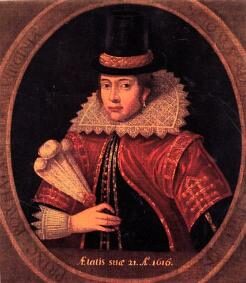
It tells the true story of Pocohantas
as accurately passed down through
the generations by way of the sacred
oral history of the Mattaponi tribe of
the Powantan. Pocohontas was a
Mattaponi.

Fulcrum Publishing
<fulcrumbooks.com> ISNBN
13;978-1-55591-632-9
          Who was the father of
Thomas Savage the Carpenter?
           Let’s look at the Contenders:

A. His father was an unknown individual living in England.
If this were the case, then we should find something in the record that
would indicate that the Carpenter traveled to Virginia. If he arrived
before 1624 he should have appeared in the muster. If he arrived after
1624 he should appear in a land record by claiming a headright, or as
being a headright claimed by another. The 1632 Patent for 100 acres
was not granted for headrights. In my view, the wording in the patent
implies that he was born in Virginia.
For these reasons, I place little credence in this possibility.

B: His father was an unknown individual living in Colonial
Virginia, but does not appear in the surviving records?
This is, of course a possibility. Many records have not survived the
ravages of time. However, an amazing amount of the records have
survived and nowhere in them have we yet found evidence of another
Savage gentleman within the colony who can qualify to be the father
of the Carpenter.
For this reason, I consider this possibility to be a low probability.

C. His father was Richard Savage who arrived in the First Supply
with Ensign Thomas Savage?
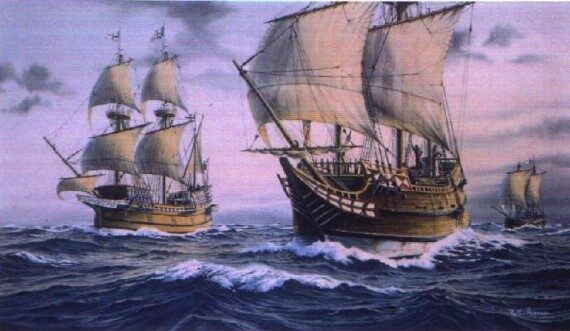
On January 8, 1607/1608 Thomas Savage at age thirteen came to
Virginia on the first ship after the initial landing, to supply Jamestown
with desperately needed supplies. This voyage of the ship, the John
and Francis is generally referred to as; The First Supply. Her Master
was Captain Christopher Newport. Also arriving with Thomas Savage
was a Richard Savage. There should be little doubt that these two
who arrived on the same ship, and were listed next to each other in
the un-alphabetized record, were kinsmen.
Captain John Smith relates that on the 29th of December, 1608 he,
with a company of 43 men set out for Werawocomoco (Powhatan's
town). The company consisted of 12 men in the barge, Discovery, 26
men in the Pinnace and five men who Smith sent overland; four
Dutchmen and Richard Savage, to build a house for Powhatan. It
appears that Richard Savage was either a Carpenter, or in charge of
the Dutchmen and the building of the house for Powhatan, as he is
identified by name. Smith also relates that later, Edward Boynton and
Richard Savage, who had been left with Powhatan, seeing the
treachery, (of the Dutchmen) endeavored to escape, but were
apprehended by the Indians.
I have found in the records no other reference to this Richard Savage.
What happened to him? Did he stay with the Indians? Was he killed
by them? Did he finally escape? If he were killed in the 1622
Powhantan uprising he should have appeared in the recorded list of
those killed. If he survived his stay with the Powhatans, and if at
some point returned to the colony, I think he would have appeared in
a land record as having been one of the Ancient Planters, or would
have been in one of the musters. If he had not survived, one might
assume that any son of his would have been adopted by Ensign
Thomas Savage who was obviously a close relative.
I believe there are enough questions involved to suggest that we not
rule out Richard Savage as a possible candidate to be the father of
Thomas the Carpenter, however I do not place him high on the list of
candidates.

D. His father was Ensign Thomas Savage?

1. We have at least three court records which tell us that Thomas the
Carpenter was related to Thomas the Ensign. Two of those records
tell us that the Carpenter was the son of the Ensign.

2. “In the early colonies, the law of primogeniture was in effect. It is
an exclusive right of the eldest son to inherit the father's estate. To
ensure that the eldest son inherited, in the event the father died
intestate, the eldest son was generally given the same name as his
father. The second son was often given the first name of one of his
uncles, generally the father's oldest brother.”
(From a lecture in 1991 by Marsha Hoffman Rising, Certified
Genealogist, Fellow, American Society of Genealogists [currently
President,] Contributing Editor, The American Genealogist.)
If the above rule was applied by Ensign Thomas Savage, his first born
son would have been named, Thomas, as in Thomas the Carpenter.
The son, John Savage (Capt.) would have been younger and named
for an uncle - and we see from the records that both names, Thomas
and John kept repeating in succeeding generations of both the
Carpenter and the Captain.

3. The Pettett deposition implies that Thomas the Carpenter and
Captain John could have been half-brothers. In either case, since they
have the same surname, they must, of course have a very recent,
common ancestor.

4. That Thomas the Carpenter and Ensign Thomas were full brothers
is unlikely since they have the same given name, which I have read
was sometimes done because of the high mortality rate, but I have
never personally observed such an actual record. That they were first
or second cousins would work, as it would be normal for the above
“Cozen” greeting to be used.

5. It appears that neither Thomas the Carpenter, nor any other
Thomas Savage ended up with the 9000 acre estate of the Ensign,
even though two records specifically name him as the son and heir. In
the surviving records, the widow, Hannah Savage, was granted the
9000 acres in 1635 in the name of her son, John Savage who was not
of age at that time. It was reissued to John Savage in 1637. In 1639
the court ordered a survey of the same land and in 1640 granted it to
Thomas Savage, “the son and heir of Ensign Thomas Savage.” In
1647, John Savage assigns 2900 acres to Argoll Yardley, referring to it
as inheritance “from my deceased father Thomas Savidge.” There
were obviously records among the missing that would clear up this
mystery, but alas, we haven't yet found them.

6. This one is a stretch, but; the 12 year old, Thomas Belson,
identified in the 1624/25 muster, as a servant of the Ensign, is the
perfect age to be the Carpenter. Was there a mistake made by the
census official? It’s interesting that the first name is, Thomas and the
last name contains the word, son. This boy would have been born
around 1612/13 at which time the Ensign would have been about 18
to 19 with hormones raging and a country full of pretty Indian
maidens. The age of 12 seems rather young to have been a servant,
but there were “boys” transported from England to serve as
apprentices for the Planters and the Belson boy could have been one
of those. Many of these old records were copied and re-copied several
times and as any researcher who has delved through thousands of old
records knows; there were many, many, errors. There may have been
a misunderstanding on the part of the census taker as regards the
boy’s name, or his status.

7. Another consideration: Is it possible that Ann Savage, who is listed
in the 1624 muster with Ensign Thomas Savage, may have been an
earlier wife and mother of Thomas; and Hannah, mother of John,
who appears years later as the Ensign’s widow, may have been a
different person? Of course it’s possible and if that were the case it
opens up another interesting group of possibilities.

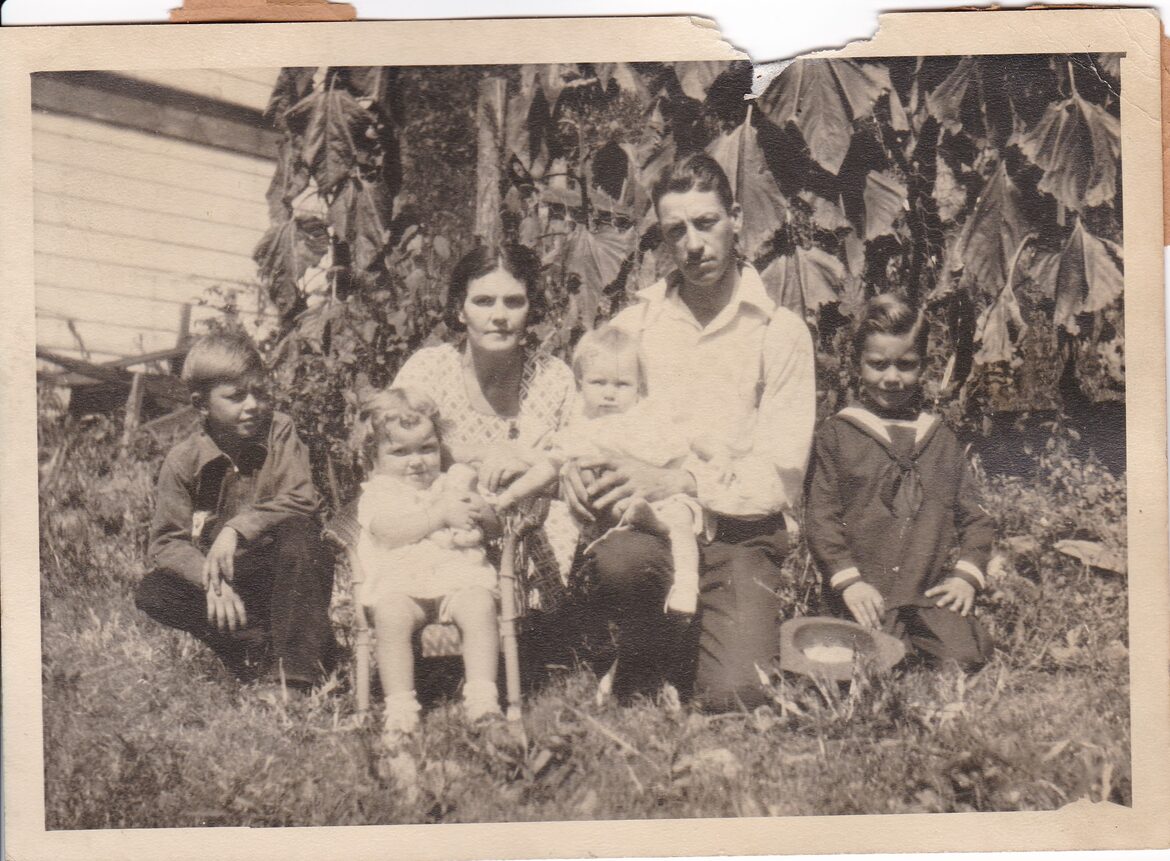
8. When I was a youngster my mother often told us that we were
descended from an “Indian Princess.” It was never an Indian woman,
Indian maiden or Indian girl - it was always, Indian Princess. My three
sisters remember the “Princess” as being on my Mother’s side of the
family (Bucklew) while a brother remembers it being on Dad’s side.
One of my nephews also remembers mom telling him that it was dad’
s side (Savage). From the time I was a small boy I found this Princess
story to be an intriguing thought, but I never put much stock into it.
Now that I have reached this point in the search for the answer to the
relationship of “The Carpenter” and “The Ensign” this old family
legend suddenly leaps out at me. My mother talked a lot about her
family while dad talked little about his - mom was more of a story
teller, but my dad’s step-mother told my mother many stories about
dad’s early life and his family. Regardless of which side of my family
the “Princess” was on, it illustrates the point that there was often inter-
marriage between the Whites and the Indians. Is it possible that
Ensign Thomas Savage may have first been married to an Indian
Princess? Although the Ensign’s wife, Ann arrived in 1621 she does
not appear in the 1623 census with Ensign Thomas. This indicates
that the Ensign married her sometime after the 1623 census and
before the 1624-25 census; meaning the Ensign would have been
about 27 years old when they were married. I consider it very unlikely
that he would have been celibate up to that time. Having lived with
the Powhatans for three years and having been in close contact with
them thereafter – and having a very close relationship with Powhatan
“royalty” it must be obvious that he had many opportunities to woo
an Indian maiden.  
Under English law, the church could not perform a marriage between
a British subject and an Indian. It would be more probable that if the
Ensign were married to an Indian girl it would have been through an
Indian ceremony to a daughter of Powantan or one of his Chiefs. If
not Powantan himself, of whom the Ensign was a “loved” and
“favored” son, then perhaps to a daughter of the King of the Eastern
Shore, Esmy Shichans, who gave the Ensign a signed deed to the
huge tract of land which reached from the Chesapeake to the Atlantic.
The only other Englishmen to be granted such a great honor was
Governor Sir George Yardley. Whitelaw says; “and at the same time
through (Thomas) Savage presented Governor Sir George Yardley
with an equally-large acreage immediately to the north of Savage.”
A child born to a couple who were not married in a way recognized
by the civil authorities was considered illegitimate. Under common
law, if the parents later married one another, the child was
legitimatized, but it had to be a legal marriage. An illegitimate child,
even if acknowledged, could not inherit from the father. If Thomas
Savage the Carpenter was the son of an Indian girl, he could not,
under the rule of primogeniture, if there were no will, inherit the estate
of Ensign Thomas Savage.
In THE COMMON LAW IN COLONIAL AMERICA, William E.
Nelson states: Virginia courts held -------//------- and that “one of the
half blood cannot inherit.”
In the excellent book, EASTERN SHORE INDIANS of Virginia and
Maryland, Helen C. Rountree and Thomas E. Davidson speak to the
subject of affairs between the English and the Indians; there were
interethnic visits that ripened into intimacy. The native people
involved were of both sexes, but the representation of social status is
uneven. Liaisons appear in the records only when some Englishman
was wronged. English males, as well as Indian men and non-servant
Indian women, owned themselves and therefore had considerable
latitude in conducting affairs (among the native people, any resulting
children stayed with the mother).
It therefore becomes entirely feasible that Ensign Thomas Savage
could have had a child with an Indian girl and whether or not they
were married the child could have been with the mother, or the
mother’s family at the time of the 1623/24 and 1624/25 censuses.

9. No record of any kind can be found which sheds light on an early
1600’s arrival of any Thomas Savage on the Eastern Shore of Virginia
other than the Ensign. There was Thomas Savage, the Gany servant,
in Elizabeth City County, across the bay, who arrived in 1623 and
died by drowning in 1626. There is also a record of a Thomas
Savidge arriving in Colonial Virginia as a headright for a Henry
Peaseley, who was granted 700 acres on Mobjack Bay across the
Chesapeake, in 1650 for the transportation of himself and 13 others,
including this Thomas Savidge. If this Thomas Savidge was our
Carpenter it means that Peaseley was not granted his Patent until 18
years after the Carpenter appears in the record for his 100 acre grant
in 1632. The 1650 Thomas Savidge, as a headright for Peaseley,
would not have been entitled to any land grant until after he served his
indenture and even then it would be highly unlikely unless it were pre-
negotiated as a part of the indenture agreement. Even then it certainly
would not have equaled 100 acres. I have looked at hundreds and
hundreds of early colonial land grants and have never found one
which names a Thomas Savage as a headright, other than the 1650
grant mentioned above.

10. The 100 acre patent granted to Thomas the Carpenter in 1632
was not designated as being based on two headrights. To me, the
wording in the document strongly infers that the grant was given for a
reason that was not particularly common. A 100 acre “Dividend”
grant was due to each Ancient Planter, i.e. a person who by 1616 had
arrived in the colony by his own adventure and dwelt in the colony for
three years, or as I have found in the 1636 Nathaniel Clark record
mentioned above, was the heir apparent of an Ancient Planter. I
believe this may be evidence that Thomas the Carpenter was the son
of a deceased Ancient Planter and was granted a dividend of 100
acres on Old Plantation Creek, a prime location. A dividend that may
never have been claimed by the Ensign.

11. To give a brief understanding of the potential of a romantic
relationship between Ensign Thomas Savage and an Indian maiden, I
would like to quote a few passages from the works of James L. Axtell,
noted professor of history at the College of William and Mary in
Williamsburg, Virginia. One of Professor Axtell’s key interests is
American Indian history:

Indians fascinated the Europeans with their nakedness and sexual
behavior. In European eyes a direct relation existed between such
tempting nudity and the Indians' libidinous behavior in which
people took to sexual exploration early in their teens, and found
nothing shameful about their bodies or their amorous potential;
they were certainly strangers to the concept of "fornification".

Ensign Thomas Savage lived with the Powhatans from the age of 13
to the age of 16-17. When he returned to live in the colony he
continued to have close ties with the Indians. He was the first white
man to settle on the Eastern Shore where he had developed such good
relations with the Accomacks that, even as a very young man he was
accepted into their councils. When Capt. John Martin visited the
Eastern Shore in April 1610, he found Thomas Savage already a
power among the red men (He would have been age 15-16 at the
time).

Indians were typically seen as young, wild, passionate, and
alluring in which some English succumbed to their aroused
passions.

With some Europeans, "going native" was not for sexual
attraction but a cultural attraction. ---------------//----------------It
was the Indians' more primitive existence that tempted them
toward a change of life.

Many New Englanders "went Native" because, as two adult
converts acknowledged, they enjoyed "the most perfect freedom,
the ease of living, [and] the absence of those cares and corroding
solicitudes which so often prevail with us."

Intermarriage and sexual relations tended to be in the patriarchal
colonial societies as Indian women felt free to move in with
European traders, hunters, and soldiers

English traders spent much or all of the year in Indian villages
where, for the sake of ingratiating themselves with their customers,
they adopted their dress, technology, language, protocol, and other
customs, especially sexual ones. Far more common were accounts
of these traders' ready acceptance of native mores. Perhaps
because the traders were among the few Englishmen to intermarry
with the Indians, early observers- often other traders- dwelt in
loving detail on these cross-cultural unions.

12. Ensign Thomas Savage was a trader. In the 1624-25 muster he is
listed as having a storehouse in which he obviously stored his goods of
trade. John Pory tells us; He (Debadevon) told us also
Opechancanough had employed Onianimo to kill Salvage; because he
brought the trade from him to the Easterne Shore. As a trader it would
make perfect sense for the Ensign to take an Indian wife. This would
give him much greater access to the various Powhatan tribes. There is
little doubt that John Rolph married Pocahontas for political reasons,
not for love. Along the same lines, Sir Thomas Dale plotted to obtain
another of Powhatan’s daughters to help insure the peace. To
accomplish this, on May 15, 1614 Ralph Hamor, Secretary of the
Colony, visited Powhatan as Dale’s emissary.

Hamor writes;

It pleased Sir Thomas Dale to employ myself, and an English boy
for my Interpreter one Thomas Salvage (who had lived three years
with Powhatan, and speaks the language naturally, one whom
Powhatan much affected)upon a message unto him, which was to
deal with him, if by any means I might procure a daughter of his,
who (Pochahantas being already in our possession) is generally
reported to be his delight, and darling, and surely he esteems her
as his own soul ) for surer pledge of peace. --------------
//---------------- I departed the fifteenth of May early in the morning
with the English Boy ----------//-----------  Powhatan himself
attending at the landing place to welcome us. His first salutation
was to the Boy, whom he very well remembered ----------//-----------
Now speak on (said Powhatan) and myself by my interpreter thus
begun. Sir Thomas Dale your Brother, the principal commander of
the English men, sends you greeting of love and peace, on his part
inviolable, and hath in testimony thereof (by me sent you a worthy
present, vid, two large pieces of copper, five strings of white and
blue beads, five wooden combs, ten fish- hooks , and a pair of
knives, all which I delivered him, one thing after another, that he
might have time to view each particular: He willed me also to
certify you, that when you pleased to send men, he would give you
a great grinding stone: my message and gift hitherto pleased him, I
proceeded thus. The fame of the exquisite perfection of your
youngest daughter, being famous through all your territories, had
come to the hearing of your Brother Sir Thomas Dale , who for
this purpose had addressed me hi-, to entreat you by that brotherly
friendship you make profession of, to permit her (with me) to
return unto him, partly for the desire which himself has , and
partly for the desire her sister has to see her of whom, if fame has
not been prodigal , as like enough it has not, your brother (by your
favor ) would gladly make his nearest companion, wife and
bedfellow (many times he would have interrupted my speech,
which I entreated him to hear out, and then if he pleased to return
me answer ) and the reason hereof is, because being now friendly
and firmly united together, and made one people (as he supposeth
and believes ) in the band of love, he would make a natural union
between us, principally because himself has taken resolution to
dwell in your country so long as he lived , and would therefore not
only have the firmest assurance he may, of perpetual friendship
from you, but also hereby bind himself thereunto.

As one can readily deduce from Dale’s attempt, he felt a marriage
between himself (who, by the way had a wife in England) and a
Powhatan girl would greatly affect a more favorable relationship with
the Powhatans. Clearly, such a union between an English trader and a
Powhatan maiden would also affect better trading terms. So again; it
would have been a wise and natural move on the part of Ensign
Thomas Savage to take an Indian wife, even in the remotest
possibility that he would have had no amorous objectives.

Powhatan’s reply to Hamor;  

I desire no firmer assurance of his friendship, then his promise
which he has already made unto me: from me, he has a pledge,
one of my daughters, which so long as she lives shall be sufficient,
when she dies he shall have another child of mine, but she yet
lives: I hold it not a brotherly part of your King, to desire to
bereave me of two of my children at once; further give him to
understand, that if he had no pledge at all he should not need to
distrust any injury from me, or any under my subjection, there
have been too many of his and my men killed, and by my occasion
there shall never be more, I which have power to perform it, have
said it: no not though I should have just occasion offered, for I am
now old , and would gladly end my days in peace, so as if the
English offer me injury, my country is large enough, I will remove
myself farther from you. Thus much I hope will satisfy my brother.
Now because yourselves are weary, and I sleepy, we will thus end
the discourse of this business.
To return to the
top of the page
Click on Home

    Robinson T. Savage,
    early pioneer of Western
    Maryland, present day
    Garrett County, was my
    great, great, great, great,
    grand-father.
    I have constructed a chart of
    the descendants of Robinson
    T. Savage which lists over
    4000 individuals.

    This chart may be accessed at
    the link below.

A great, great, grand-son of
Thomas Savage
was
Robinson T. Savage
Thomas Savage the Carpenter built boats.
A Shallop was typical of the kind of boats
built by his crew.
Savage Ancestry - Savage History - Savage Genealogy - Savage Family - Savage Lore - Savage Legend - Savage Traces - Savage Honor
Savage Women - Savage Roots - Savage Lineage - Savage Adventure - Savage Pioneers - Savage Hero's - Savage Men - Savage Arms
Jamestown Plaque dedicated to Ensign Thomas Savage

THOMAS SAVAGE GENTLEMAN AND ENSIGN
THE FIRST WHITE SETTLEMENT ON THE EASTERN SHORE OF VIRGINIA
HOSTAGE TO POWHATAN 1508, HIS LOYALTY AND
FEARLESSNESS ENDEARED HIM TO THE GREAT KING WHO TREATED HIM AS HIS SON
WHILE HE RENDERED INVALUABLE AID TO THE COLONY AS INTERPRETER.
GREATLY LOVED BY DEBEDEAVON, THE LAUGHING KING OF THE ACCAWMACKES.
HE WAS GIVEN A TRACT OF 9000 ACRES OF LAND
KNOWN AS SAVAGE'S NECK.
HE OBTAINED FOOD FOR THE STARVING COLONY AT JAMESTOWN THROUGH HIS
FRIENDSHIP WITH THE KINDLY EASTERN SHORE INDIANS.
A RELATION OF HIS VOYAGES ON THE GREAT BAY IN SEARCH OF THE TRADE FOR THE
ENGLISH WAS READ BEFORE THE LONDON COMPANY AT A COURT HELD JULY 19TH 1621.
JOHN PORY, SECRETARY OF THE COLONY SAYS, "HE WITH MUCH HONESTIE
AND GOOD SUCCESSES, SERVED THE PUBLIQUE WITHOUT ANY PUBLIQUE RECOMPENSE,
YET HAD AN ARROW SHOT THROUGH HIS BODY IN THEIR SERVICE.   
17th-century European engraving depicts Powhatan receiving Ralph
Hamor, secretary of the Virginia colony, and interpreter
Thomas Savage
in 1614 at the chief’s new capital of Matchcot on the Pamunkey River.
.
In the text to the left see Hamor's reference to this meeting .

Hamor further relates: I had Thomas Slauage with me, for my
interpreter; with him and two Saluages, for guides; I went from the
Bermuda in the morning, and came to Matchot the next night, where
the King (Powhatan) lay upon the River of Pamaunke; his
entertainment was strange to me, the boy (Thomas Savage) he knew
well and told him; My child, I gave you leave, being my boy, to goe see
your friends, and these foure yeares I have not seene you, nor heard of
my owne man Namontack.  

Ensign Thomas Savage was an "adopted brother"
to Pocahontas and lived in everyday association with her
for three years.
Theodore De Bry wood cut of Colonial artist John White's first-hand,
water color depiction of the Virginia/North Carolina Indian.
This European painting of the wedding of Pocohantas and John Rolfe
is said to include Ensign Thomas Savage
    I have not materially updated this site since 3-3-2009 as I have not found any new information on either Ensign Thomas
    Savage or Thomas Savage the Carpenter. My time has been spent working to complete a book which will be a follow-up
    to my original book; SAVAGE IS MY NAME. This follow-up, or sequel, will describe in detail what I believe to be the
    possible relationship of Ensign Thomas and Thomas the Carpenter.
    See the bottom of this page for a preview.
                                               
                                                                     My Library of Colonial Virginia

                                                                                                            11-04-2009


    01. Virginia’s Eastern Shore  Vol. I & II                                                               Ralph T. Whitelaw
    02. Marriages, Northampton County, Virginia 1660-1854                                       Jean Mihalyka
    03. America’s First Family, The Savages of Virginia                                              Burghard
    04. The Ancient And Noble Family Of The Savages Of The Ards                            G.F.Armstrong
    05. We Are The Savages                                                                                        J.C. Savage
    06. Wills And Adms of  Accomack Co. Va. 1663 – 1800                                          Stratton Nottingham
    07. Savage Kingdom – The True Story of Jamestown                                             Benjamin Wooley
    08. Virginia Immigrants And Adventurers 1607 – 1635                                         Martha W. McCartney
    09. Loose Papers and Sundry Court Cases 1628 – 1731                                         Jean Mihalyka
    10. Ye Kingdom Of Accawmacke                                                                          Jennings Cropper Wise
    11. The Peopling of British North America                                                            Bernard Bailyn
    12. Savage Is My Name                                                                                         R. Blair Savage
    13. Accomack Tithables 1663 – 1695                                                                     Stratton Nottingham
    14. Mother Earth – Land Grants in Virginia                                                         W. Stitt Robinson, Jr.
    15. One Among the Indians                                                                                  Martha Bennett Stiles
    16. Virginia – The First Seventeen Years                                                             Charles E. Hatch, Jr.
    17. Reading, Writing and Arithmetic in Virginia 1607-09                                     Susie Ames
    18. Northampton Co. Va. Record Bk, Orders, Deeds, Wills, 1654-55                     Mackey & Groves
    19. Pocahontas's People: The Powhatan Indians of Virginia                                  Rountree
    20. The Jamestown Adventure: Accts of the Virginia Colony, 1605-1614               Southern
    21. Eastern Shore Indians of Virginia and Maryland                                             Rountree & Davidson
    22. Before and After Jamestown: Virginia's Powhatans                                        Rountree & Turner
    23. Pocahontas, Powhatan, Opechancanough                                                        Rountree
    24. Jamestowne Ancestors 1607-1699                                                                   Davis
    25. The Common Law of Colonial America:                                                         Nelson
    26. A Land As God Made It: Jamestown & The Birth Of America                        Horn
    27. Co. Ct. Records of Accomack-Northampton 1640-1645                                   Susie Ames
    28. Jamestown, the Buried Truth                                                                         Kelso
    29. The Jamestown Colony – Cornerstones of Freedom                                       Sakurai
    30. Studies of the Virginia Eastern Shore in the seventeenth century                  Susie M Ames
    31. Who’s Saying What in Jamestown, Thomas Savage                                       Jean Fritz
    32. The Records of the Va. Co. of London, The Court Book, Vol. 1, 1619/22        Susan M. Kingsbury
    33. The Records of the Va. Co. of London - on CD, Vol. 1,2,3,4                           Susan M. Kingsbury
    34. The Powhatan Indians of Virginia                                                                  Helen C. Rountree
    35. The Eastern Shore of Virginia, 1603-1964                                                      Nora Miller Turman
    36. The True Story of Pocahontas:  The Other Side of History                             Custalow & Daniel
    37. Life of the Powhatan (Native Nations of North America)                                Sjonger & Kalman
    38. Adventures of Purse and Person, Virginia 1607-1624/5, Vol. I, A-F               John Dorman
    39. First People: The Early Indians of Virginia"                                                  Keith Egloff;
    40. Captain John Smith                                                                                       Horn
    41. 1815 Directories of Accomack & Northampton Landowners                           Roger G. Ward
    42. Virginia ‘Publick’ Claims, Accomack & Northampton, 1780-83                     Abercrombie & Slatten
    43. The Jamestown Project                                                                                  Karen Ordahl Kupperman
         44. Powhatan's Mantle: Indians in the Colonial Southeast                                   Gregory A. Waselkov
   
     45. Abstracts of Wills, Adm. Of Northampton Co. VA. 1632-1802 (on ord.)          James Handley Marshall
        46. Accomack Co. VA. Court Order Abstracts Vol. 1-10: 1663-1710 (CD)            JoAnn Riley McKey
        47.The Historie of Travaile into Virginia Britannia                                              William Strachey
        48. Formation Of A Society On Virginia’s Eastern Shore                                    James R. Perry
        49. Between Two Worlds                                                                                     Christopher Clausen


   Savage Is My Name - Part II


                                            by

                 R. Blair Savage
A Study of the Relationship
of
Thomas Savage the Carpenter
&
Ensign Thomas Savage
of
Virginia’s Eastern Shore

1607 – 1655
Coming soon

    Many historians rely heavily on the muster of 1624-25 which took place after the Crown took over the colony. In
    Adventurers of Purse and Person by John Fredrick Dorman, the “Bible” to many Virginia historians, Dorman claims that
    the muster probably was a final compilation of information gathered during the seven or eight months following the
    dissolution of the Virginia Company. Dorman also states that the muster gives a fairly approximate idea as to the
    condition of the colony at that time.
    Over a seven to eight month period many changes could have occurred within the colony. People could have moved from
    one place to another. People could have arrived – they could have left. Births could have occurred – people could have
    died. Folks could have moved from an area yet to be counted and into an area where the count had already been taken.
    While the musters are of tremendous value to the historian and genealogist, they must be viewed for what they are;
    approximations.
    -----------------------------------
    There is a key phrase in this document; ordered that all such planters and other persons whatsoever as have no land due
    unto them by any adventure or otherwise should have a certain quantity of land granted unto them. I believe this may
    have been intended to provide a method of awarding a land grant to one who was qualified as an Adventurer or a Planter
    and for whatever circumstance found himself in a position of having no land grant. An example of such a circumstance
    might be a person who was born in Virginia to an Adventurer or a Planter, became an orphan who did not qualify as an
    heir, and became lost in the shuffle.
    Old Plantation Creek is the first major creek, north of the mouth of the bay, that cuts into the Eastern Shore. When the
    English arrived in 1607/08 the inhabitants on the Shore were the Accawmack Indians. About 1618, Ensign Thomas
    Savage used his ability to speak the various Powhatan dialects and his good relations with the Indians to set up a trading
    operation and an English foothold on the Shore. The English planters and settlers followed and within 20 years the
    population of newcomers neared 400. According to the Association for the Preservation of Virginia Antiquities, Old
    Plantation Creek was the hub of activity with numerous farms and estates springing up.
A couple excerpts from the book:

This book will include, but expand substantially upon what is
included on this web site about our two Thomas Savages. It will
be approximately 110 pages in length.